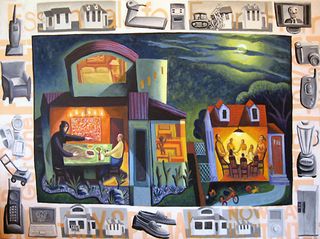
Sunday, 28 June 2020

The sacrifice of....what? Isaac and Jephthah's daughter

The sacrifice of sense: Genesis 22:1-19 and Judges 11
The text for last Sunday is a profound and disturbing story that takes us into the very heart of religious violence.
It is a well-known text. It is powerful and evocative. It deliberately focuses on the main protagonist of Abraham and ignores the potential thoughts and feelings of other characters in the story. It is a story that demands our full attention and should be examined from many points of view.
Part of why it is disturbing is that even today, people carry out acts of violence against children and claim they have heard God directly authorising such violence. In our modern culture, we call such people criminally insane and lock them up.
Despite this, many today will hear this story, and praise Abraham for his great faith and obedience to God. I am sure that you must have heard sermons that have this as the central message. Despite the fact that Abraham is prepared to plunge a knife in his hapless son’s throat, few Christian people suggest that Abraham should be locked up. Is it because we accept that God was always going to save Isaac? Is it because it is so far removed from our time and life that it is a little like hearing a fairy story?
In Abraham’s day, human sacrifice – killing and then burning the remains of human beings of all ages – would not have been understood as madness, violence, or abuse, but as something that demonstrated devotion to the greater good – and the greater god. It was a terrible and costly price to pay but seen by many in the cultures of the Ancient Near East as necessary from time to time to placate angry gods, or ensure a good harvest.
Some biblical scholars believe that the Isaac story was written to counter such practices, and the Law expressly prohibited any sort of human sacrifice. That this law was deemed necessary suggests that such sacrifices had indeed taken place.
It is easy for us to interpret this as the ultimate test of faith that Abraham passes. But surely the story should be raising other questions for us. How did this affect Isaac? How did he feel when bound by his own father to a sacrificial bier? What did he think when he saw the knife about to plunge into his throat? How could he ever trust his father again? What sort of a God demands such a terrible test of faith?
We find another such story of a child presented for sacrifice in the book of the Judges (Judges 11:29-40), a story about a man called Jephthah, who was commanding the Israelite army who were fighting the Ammonites. The story says that “the spirit of the LORD came upon him”, and Jephthah made a vow stating that if God delivered the enemy to him, Jephthah would sacrifice the first living thing to come out of the doors of his house to meet him. It would seem that God accepted his oath, because he was successful in defeating the enemy.
Jephthah goes home, and his daughter, his only child, is first out to meet him with music and dancing, to celebrate his victory. When he sees her, he tears his clothes, and says, “Alas, my daughter! You have brought me very low; you have become the cause of great trouble to me. For I have opened my mouth to the LORD, and I cannot take back my vow.”
What does the daughter of Jephthah do? Rather than blaming her father for his vow, she agrees that he cannot take it back, and she is willing to be sacrificed. And sacrificed she is, after she mourns her fate for two months.
This does raise the question of where God was when this child was being sacrificed for a father faithfully carrying out his oath. Why did no angel call out, why was no ram found in the thicket for her? Is it because girls were not valued as highly as sons? Why don’t we celebrate Jephthah’s daughter for her faith? Have most of us even heard of her?
Isaac is saved by divine intervention and the daughter of Jephthah is saved by no one. Why do we continue to retell only one of these stories in our churches? Why do we laud one father as having great faith and great wisdom and not the other father?
Our own Christian tradition has consistently interpreted as faithful obedience what would be considered religious infanticide in any other setting in history. Jephthah is labelled mostly as a madman who is cursed by God, Abraham is labelled father of faith. Why?
Where are the Isaacs and daughters of Jephthah today? Are they listed as statistics in royal commissions, silenced and hidden? What happens to them if they speak? Do we just sit back, and half-heartedly hope for a miracle, only to find Jephthah’s daughter lies broken and bleeding on our doorstep and Isaac has profound depression and suicidal thoughts? Do we remember every year the names of those who have died by violence at the hands of those they loved and should have been able to trust?
Perhaps it is time we gave a lot more thought as to how we should respond as Christians to such stories today.
The attached video is shows artist Kevin Rolly giving Jephthah’s daughter a face. The music accompanying the painting is With This Love by Peter Gabriel

Saturday, 2 May 2020

The Lord is my shepherd, I shall not WANT


Psalm 23

This Sunday (3 May) is what has become known as Good Shepherd Sunday. Every reading is full of sheep and shepherds. This bucolic imagery promises sentimental visions of verdant pastures and contented sheep, especially Psalm 23.


For many of us Psalm 23 is very special.  We hold it dear: it has been a source of comfort for us in difficult times.  In my experience, it is the most commonly requested Psalm for funerals.

Yet it is precisely this familiarity with the words and possibly even our sentimentality about them that makes it difficult to hear just how challenging they are.

Often they come across like just another platitude; words designed to help us feel good when we are feeling down.

The psalm does do this, but when read carefully, it also presents some challenges for us.

The first line of the 23rd psalm starts: “The Lord is my Shepherd, I shall not want”

How does this phrase, ‘I shall not want’, strike you? Another way of translating this is “The Lord is my Shepherd, I have all that I need.”

Is this line in the psalm really something we have thought about?
Is this how any of us experience and think about life?

I know that ‘I want’ and I live in a society where my wants are encouraged, and even manipulated. Just think about it for a minute... what do you want? What are you being taught to want?

Psalm 23 begins with the notion that the sheep will not want because the Shepherd will have provided for them with all they need or want for: green pastures, still waters and a safe place.

We live in a consumerist society that thrives, even depends, on teaching us to want. To want more and more and more:

                    I want a new car.
                     I want a large flat screen TV and a home movie theatre.
                     I want the very latest in technology.
                     I want to win lotto.
                     I want a bigger house.
                     I want it all...right now.

But it’s not just that we want possessions either – we also want things of an emotional and spiritual nature as well.

I want a happy life.
I want to live in safety and security.
I want the best for my children and my grandchildren.
I want my husband to be more considerate.
I want my wife to understand me.
I want God to bless me
I want to be recognised for my work.

I want and I want and I want.

All this wanting seems somewhat ironic when you think about how comparatively wealthy and free most of us are in Australia. When you consider the access most of us have to housing, to food, to education, to healthcare, to freedom in worship it could appear to those in other, poorer nations that we spend a lot of time complaining and not enough time being grateful .

One would think that by now we would have realised that we do not really want for much at all, that we pretty much do have all that we need.

There are signs of this wanting everywhere: the increasing size of houses (Sydney’s are the biggest in the first world), people constantly upgrading their technology, a growing proportion of the population with obesity, the increase of anxiety disorders in our Western culture.

Further, we live in a time where we have become almost incapable of being led to rest beside waters. Instead, we are busy about damming up those waters and diverting them for irrigation, fighting simultaneously with the farmers upstream who we suspect are getting more than their fair share.

The cost of saying “I want” is great. Not just to our culture but also to those places around the world where our Western materialism is propped up by people who earn next to nothing, who could even be considered slaves and sometimes literally are, who live in squalor and poverty to provide us with the things that we want. Are we more likely today to travel through the valley of the shadow of debt rather than the valley of the shadow of death?

So with all of this wanting around us, and in our own lives as well, how do we read those well loved words when we consider the consequences that our wanting brings?

For those of us with faith, continuing to want when we have been provided enough somehow seems at odds with the message: “I shall not want”

Given that we know the good news that God has reconciled and renewed us through Jesus we can begin to understand that life isn’t just about what I think “I want”.

We who have encountered this good news are challenged to think upon our not wanting. Psalm 23 is for us, a counter-cultural and revolutionary statement that could change our world, and should turn our lives upside down.

Jesus, the good shepherd, calls us out of our comfortable homes, away from living off of the lush pastures available to us right here and out to the margins, so all might eat good food, drink clean water, and enjoy the privileges we have such as education, healthcare and the power that comes with them.

“The Lord is my shepherd, and I have all that I need” will only be true when the world lives out the justice and righteousness that the psalmist proclaims, and when all of God's children can sing with the psalmist in celebration of this line as a present reality rather than a future hope.


Saturday, 14 March 2020

A lament for Communion


Our church has recently had to face the reality of  COVID-19, otherwise known as the corona virus. Like many churches, a good proportion of ours is elderly and in the high risk categories to catch the virus with severe consequences. Because of this risk factor, our church has decided to suspend any physical contact whilst passing the peace with each other and shaking hands with me (the minister) at door. On further reflection, we also decided it was also prudent to suspend communion as we could not guarantee that any infection would not be passed on. This service was written to replace our planned communion service today (Sunday 15 March), to lament that while we could not hold it at present, we could still remember and praise God.

An order of service for a time when Holy Communion was planned
but not able to be held (written during the COVID-19 pandemic, March 2020)

HYMN 707:   Bread is blessed and broken

OFFERING (Prayer from Spill the Beans)
Bless all the gifts offered,
as all are the work of our hands,
and the hopes of our hearts;
and bring them to bear
upon the hunger and hurts of the world.

Set us free from fear.
Stand us upright in grace.

May our shame and our anger
be transformed
from burdens that hold us back in fear
to gifts that urge us forward in love.

Lead us to the well
and help us to drink deeply. Amen.

THE PEACE
We pass the peace by facing one another, placing our hand on our heart, looking at the other person, and saying “peace be with you”

Holy God, it is our practice to come to this table
to receive the bread and wine.
Today we cannot do this,
for to do so would put ourselves and others at risk.

Yet we know that you still meet us here;
you embrace us in our brokenness,
you pour out your love upon us,
name us as your disciples,
and claim us for an eternity.
And we can still remember, as you commanded.

We lament that we will not share
the bread and wine today.
We lament that we cannot grasp
a hand in fellowship today.
We lament the suspending of this sacrament.
 We can remember that the Lord is with us.
We can remember to lift up our hearts.
We can remember to give thanks to the Lord our God.

Blessing and praise still belongs to you,
God of promise and of covenant.

Through your living Word
you created all things,
the majesty of the heavens
and the glory of the earth.
In your wisdom and goodness
you have made all people
in your image and likeness.

We remember too
that in the fullness of time
you gave your only Son
to share our human nature,
to be tempted in every way as we are,
And who set his face resolutely towards Jerusalem
to be lifted high upon the cross.

We remember too
that on the night of his betrayal
your Son Jesus took the bread
and took the wine, blessed them
and shared them with his closest friends,
saying: "Remember me.”

Come now, Holy Spirit;
bless us as we gather here today.
Unite us in love and peace with all your people
until, with the whole company of heaven,
we are brought into the presence of your eternal glory,
through Jesus Christ our Lord. Amen.

THE LORD’S PRAYER


LENTEN PRAYER AFTER COMMUNION

Merciful God, you called us forth from the dust of the earth;
you claimed us for Christ in the waters of baptism.
Bless our journey through the desert
of Lent to the font of rebirth.
May our fasting be hunger for justice; 
our alms, a making of peace;
our prayer, the chant of humble and grateful hearts.
All that we do and pray is in the name of Jesus.  Amen.


Friday, 16 August 2019


Luke 12:49-56

"Do you think that I have come to bring peace to the earth? No, I tell you, but rather division!”

The words of Jesus from this week’s gospel reading are quite confronting. They do not reflect the notions of God we have cultivated in our progressive Protestant churches, which prefer a God who is ‘nice’, and a Jesus who is meek, mild and humble. Luke’s Jesus is having none of this sort of thinking. Instead, he offers something of what it will mean to redeem a world that is anything but nice.

It is evident from the many things that trouble our world, things such as war, famine, and oppressions, that we are not yet living in the kingdom of God where goodness, beauty, and just and life-giving opportunities are there for all. Our world is instead broken and scarred, offering death rather than life to many people and many other living things. Our structural systems are exploitative and non-sustainable. Luke’s Jesus is saying that redemption can only happen when such systems are confronted and destroyed by apocalyptic fire, as this is necessary for new life to emerge. Jesus comes not to stir up a nice world but to shatter the disturbing and death-dealing structural systems of a world that stifles life.

It is no wonder that Jesus' call for redemption stirred up division during his time. How do we hear this call today? What are the ‘signs of the times’ we should be looking for today in a world that is not only battered and broken, but that also increasingly rejects the church?  
The words of this Lukan Jesus remind us that it is only when we set fire to the old that the new can emerge. It is only when we challenge the traditions, structures and habits that no longer serve us all well that we can start to change what is wrong.  Change is only possible at the edge of chaos, and perhaps this is what Jesus meant when he spoke of bringing fire and division to the earth. Jesus came to cause chaos and change because business as usual was no longer an option for ensuring all would have life.

Many of us today are materially rich and spiritually poor. Money and power continue to obscure what should be the important values for humanity. A world which relies on exploitation and oppression to run its economy at the expense of others' basic needs is a world that needs the disrupting influence of the gospel.

In a world whose systems do not encourage a flourishing life for all, the chaos brought by the chaotic words of Jesus might just constitute good news. This gospel passage calls us to be witnesses to this good news, and to the chaos that represents God’s consuming and compelling presence.


Sunday, 11 August 2019

Reflections on Isaiah 1


"I hate your new moons and your appointed festivals." These are threatening words from Isaiah. Whenever I read them, they make me uncomfortable, because I find the ritual of worship and the Christian calendar of seasons and feasts very meaningful. I understand and appreciate the Christian tradition, how it marks the year into times of pilgrimage, penitence, remembering and rejoicing. It encourages us to pursue spiritual transformation on our faith journeys. Our Sunday worship is hallowed by centuries of practice by faithful people.
While we no longer offer animal sacrifices, preferring to offer prayers instead, Isaiah still has a point. Because our hands are still bloody with structural wrongdoing – and I say structural because Isaiah’s problem is communal worship and lack of action, not individual in this passage. God would not pleased by worship that begins and ends with Sunday, because if we aren't also pursuing justice as a community of faith, our rituals are meaningless. Worse than meaningless, because they delude us into thinking that attending church means we have fulfilled all righteousness as Christians even if our world is unjust, and war and famine and discrimination and the consequences of climate change rage around us.
I have always loved liturgy. As a minister, it is part of my work to structure it and create content in such a way that it hopefully connects spiritually with people. Through the Christian sacraments and rites of passage, and the ancient texts of the bible, the hope is we will develop a meaningful relationship with God. But when I read Isaiah's words, I have a sneaking suspicion that he is right. Too often faith begins and ends with Sunday worship
Isaiah was a prophet, and it was the job of the prophets to speak truth to power.  In many ways, the prophets were the conscience of the kings and the rulers. Here, Isaiah is saying don’t think you can rely on the idea that performing the right sacrifice makes you good with God. Observing the festivals doesn’t make you a faithful person.  God is demanding more than that. God is demanding justice and right behaviour as a flow on from religious practice. If you aren’t acting justly, says God, then it doesn't matter at all whether you're doing the right sacrifices at the right time, or saying the right prayers at the right feasts or singing the right psalms. It isn’t going to cut the mustard.
No doubt this statement from Isaiah brought him into conflict with the priests, whose job it was to oversee the sacrifices and rituals. I can’t imagine they would be pleased with these words at all. Ancient Jewish priests formed part of the ruling class that oversaw not only the Temple, but the law and how it functioned in society. Isaiah’s statement is making it pretty clear he saw the priests as part of the structural problem of injustice.
We have neither priests doing sacrifices or official prophets in our world today. But the words of Isaiah still resonate. What exactly do our rituals mean today? How do we hear and practice God's call for justice?
For me, Isaiah's furious words have a lot to say to us. There are many examples of structural injustice in our world today. One that seems to becoming more obvious and more frightening is that of structural racism.
How many of you watched the recent documentary about Adam Goodes, The Final Quarter? Ian Darling’s documentary follows AFL legend and 2014 Australian of the Year Adam Goodes, who spent the last three years of his career being booed by the public and demonised by the right wing media. I am suggesting that it was because Adam was a proud Aboriginal man.
Adam Goodes was born in South Australia, to Lisa May and Graham Goodes, His father is of British ancestry; his mother is an Indigenous Australian (Adnyamathanha and Narungga) and is one of the Stolen Generation.
Goodes' parents were separated when he was four; his father moved to Queensland while Goodes moved between South Australia and Victoria with his mother. It is probably safe to say that Adam Goodes, though his mother, knew the trauma and racism of the aboriginal people through policies that led to children being taken, and the barring of Aboriginal people from participating in social and civic life.
It is estimated that between 1883 and 1969 more than 6,200 Aboriginal children were stolen in NSW alone. Australia-wide numbers are in the tens of thousands. This had profound effects on individuals and families, causing intergenerational trauma and a myriad of social and health problems.
The Last Quarter is a powerful film that holds a mirror to Australia and suggests we reconsider what happened on and off the football field.
In one review, it was said that The Final Quarter is “a painful reminder of the racism beating at the heart of Australia”. Goodes became a lightning rod for an intense public debate and widespread media commentary that divided the country. In the last three years of his career, during which Goodes was named Australian of the Year, he was accused of staging for free kicks, picking on a teenage girl who called him an ape, incessantly booed, and heavily criticised for performing an on-field war dance celebration after a goal. When the football crowds continued to turn on him, the Brownlow medallist left his beloved game.
John and I watched The Final Quarter on Peter Fitzsimmons’ recommendation. I had never understood until now just how bad things were for Adam Goodes. It was clear that Goodes’ words and actions simply did not match up with the way many conservative pundits and sports commentators displayed them. He was calm, gracious and sensible under fire.
The most telling comment came from a panel member of The Drum. He pointed out that we are fine with Aboriginal players as long as they play by the unspoken white rules and don’t rock the boat. Adam Goodes simply refused to do that, calling out racism and acting like a man proud of his culture.
We live in a nation marred by systemic racism and injustice. Mainstream racism is on the rise in Australia right now. And the statistics bear this out.
A new report suggests Aboriginal people are facing enormous pressure to lose their traditional culture in order to be successful in Australia. Many Aboriginal people feel they are not wanted by white Australia.
Over 90 per cent said Aboriginal people were talked to like they did not matter and were judged by stereotypes.
Many respondents said they did not feel comfortable going out in public, to restaurants, or to shopping centres because they were scared of being stared at and treated differently.
Only 16 per cent thought non-Indigenous Australians tried to understand Aboriginal culture.
Aboriginal people also found the criminal justice system and Australia's political system to be deeply racist because neither acknowledged Aboriginal traditions or lore.
In 2016, the unemployment rate for Indigenous people of working age was 18.4 per cent, 2.7 times the non-Indigenous unemployment rate (6.8 per cent).
Aboriginal suicide rate is six time higher than the rest of Australia.
As of 30 June 2018, there were 11,849 prisoners who identified as Aboriginal and Torres Strait Islander.
Aboriginal and Torres Strait Islander prisoners accounted for just over a quarter (27%) of the total Australian prisoner population, yet they are only  constitute 2% of the Australian population aged 18 years and over.
Aboriginal people are much more likely to be questioned by police… When questioned they are more likely to be arrested rather than proceeded against by summons. If they are arrested, Aboriginal people are much more likely to be remanded in custody than given bail. Aboriginal people are much more likely to plead guilty than go to trial, and if they go to trial, they are much more likely to be convicted… they are much more likely to be imprisoned… and at the end of their term of imprisonment they are much less likely to get parole.
Unpaid fines, swearing or shouting in public are offenses a white person is very unlikely to be charged with, let alone jailed for. Dr Brian Steels, restorative justice researcher at Murdoch University said that “In all my years of research in criminal justice, I can tell you it would be very difficult to find a white person charged with shouting or swearing”.
The system is patently unfair and cannot be understood in any other way except racist.
Australia is never going to achieve reconciliation or justice for Aboriginal people until it comes to terms with its history. Not only was the land of the first peoples taken from them and colonised, they were killed in enormous numbers. The Killing Times, a Guardian special report using stories told by descendants on all sides, attempted to count the human cost of more than a century of frontier bloodshed.
Two historians, Raymond Evans and Robert Ørsted-Jensen, have concluded that in Queensland alone – the epicentre of frontier war in the mid-19th century Australia – at least 65,180 Aboriginal Australians were killed from the 1820s until the early 1900s. Considering that their research focuses on Queensland alone, their findings come with the disturbing implication about the number of Indigenous Australians killed continent-wide is very high.
The written records where we have them, are chilling, as described in this letter from a Gippsland squatter, Henry Meyrick, to his family in England in 1846:
The blacks are very quiet here now, poor wretches. No wild beast of the forest was ever hunted down with such unsparing perseverance as they are. Men, women and children are shot whenever they can be met with … I have protested against it at every station I have been in Gippsland, in the strongest language, but these things are kept very secret as the penalty would certainly be hanging.
The truth of Australia’s history has long been hiding in plain sight. White Australia has the blood on our hands that Isaiah accuses us of.
While it is true that there is no place on this earth where perfect justice prevails, or where racism and prejudice are unknown, this is no excuse for Australians to stick their heads in the sand. The situation isn’t going to get better unless we do something about it.
White people are not as likely to be searched, or mistreated by the police. Through no merit of their own, white people are likely to be treated better than their non-white friends. No one will glare at them or follow them around in department stores, assuming automatically that they are there to shoplift.
Isaiah talked about systemic, endemic, structural communal wrongs, when he ordered people to “cease to do evil, learn to do good, seek justice, to rescue the oppressed, defend the orphan, plead for the widow, the implication being that these things were not happening despite the religious practice of the people.
There is still a systemic racism endemic to our own time. where dark-skinned people are persistently suspected, mistreated, disenfranchised, incarcerated, and even killed.
Isaiah calls us to turn from evil and do good, and as part of our faith, to seek justice, not only for people who look like us or sound like us, but for all people; for everyone created in the image of God. This includes refugees, whose appalling treatment by the Australian government flies in the face of all religious teaching,
Isaiah demands that we create justice for those in need. If we don't, then what does it matter how meaningful our worship is? If we fail to live by Christianity’s powerful ethical and moral teachings, then we deserve Isaiah's condemnation.
If we don't work to change the systemic racism endemic to Australia, then we are no better than those who were making their sacrifices but didn't worry about the poor being cheated, or about people in power using that power to disenfranchise and oppress others.
It's our mission to work toward a future in which racism and prejudice are eradicated: not just at an individual level, but on a societal and systemic level.
It's our responsibility as Christians to make a better world, one that is more just for us and for our children, because we are all God’s children.
It’s our calling as disciples to recognise our worship is meaningless unless it compels us out into the world to take action.
I want to end with a quote from Rabbi Abraham Joshua Heschel, who once described racism as humanity’s gravest threat to humanity and as the maximum of hatred for a minimum of reason. In a statement that reflects Isaiah, he says:
May we find the strength and the compassion to challenge what is unjust and to change what is not right. Amen.

Wednesday, 31 July 2019


Luke 12: 13-21
With the parable set for today’s lectionary readings, Luke strikes again, with what appears to be another blow to the well off. And indeed, this parable really does go right to the heart of modern consumerism and Western habits.
Just to recap, Jesus is telling the story of a wealthy farmer who has done well with his harvest, and even though he has an adequate amount, he decides he wants still more, so builds bigger barns to store more grain and goods. Just as he is congratulating himself on his prosperity and comfortable future, God appears to inform him that it has all been for nought. This is the only parable in Luke in which God directly addresses a character, saying: "You fool! This very night your life is being demanded of you. And the things you have prepared, whose will they be?" (12:20).
Therefore, concludes Jesus, “Take care! Be on your guard against all kinds of greed; for one’s life does not consist in the abundance of possessions.”
Who do you align yourself with in this parable? As a gut reaction, I am really not too keen on this wealthy farmer who is congratulating himself on his huge harvest, and who is planning to pull down his barns to build bigger ones. I am not a fan of his hoarding for his own benefit and selfish pleasure. I know that in first century Jewish culture he should have been providing some of that harvest for the benefit of his poorer neighbours, to protect them from famine.
Yet how much of our lives is devoted to acquiring stuff? How much does advertising try and convince us that our lives would be better with a new gadget laden car, or to own a bigger or more fashionable home in a better area? I don’t think I have ever seen as many ads for luxury cruises than in recent months, which try and convince me life begins with a cruise in luxurious or exotic holiday destinations. Where my every need will be met so I can truly live. And many ads attempt to convince me I need to buy lots of new clothes and a new set of accessories every season, not to mention the latest get fit or labour-saving device for the home.
Slogans such as “shop until you drop”, “spoil yourself”, “you’re worth it”, and indulge in “retail therapy” abound. Google searches threw up About 3,240,000 results (0.47 seconds) for “you’re worth it”. It threw up about 3,010,000 results (0.42 seconds) for “spoil yourself”. All this seems to imply we live in a world where material goods and self-indulgence will make us happier, healthier, better looking, possibly younger and more relaxed people.
What's really frightening is that we are just a bit too close for comfort to the portrait of the wealthy farmer. After all, he is not a bad person. Luke doesn’t say he gained his money dishonestly, or that he cheats his servants, or even that he is particularly avaricious. The wealthy farmer is a person a lot like us. He has worked hard for his harvest and his money and wants to ensure his future and his retirement. His sin, if I can use that word, is not so much he has accumulated wealth as that he has put all of his faith in his wealth. He believes money can secure his future as an individual, and that he doesn’t need others or even God to help preserve him from want in his old age.
If we are honest, we should be admitting that many of us have thought in similar ways to this farmer. ‘If I only I had more money, if only my mortgage was paid off, if only my car was newer, or my house bigger, I would be happier and my life would be better.
For example, Australians have the second biggest houses in the world, having been overtaken recently by the USA. Analysis by the CommSec of figures commissioned from the ABS shows the average new home is 189.8 square metres, down 2.7 per cent over the past year. However, this is a bit artificial as people are buying more apartments due to huge house prices.
Australian detached houses that do get built are the biggest they have ever been. The average new house in 2016-17 was 233.3 square metres, 11 per cent bigger than 20 years ago.
The Wall Street Journal lists that the median size of a new home in the U.S. is 229 square metres, up 61% from just 40 years ago and up 11% in the last 10 years.
At just 15 m2 a person in Hong Kong has just a quarter of the floor space of the average Australian or American. Around six people occupy the same floor space in Africa and the Middle East as two would in the Australia.
(Statistics from The Urban developer)
Our consumeristic society strives to create an illusion that money and things guarantee our happiness, health and security. It silkily implies that we can be quarantined from everyday vulnerabilities and needs. It downplays the fact that we are vulnerable mortals who are ultimately dependent on others and God for our physical and mental well-being, which is why we have societies, communities and churches. French essayist, Michael de Montaigne said, “It's not the want, but rather abundance that creates avarice.”
If we cannot even see over the piles of possessions we have (or wished we had), what is that saying about where meaning actually exists in our lives?
Our society, based on the civil religion of capitalism, perceives greed as good and consumerism as desirable. Here in Australia, according to the news and our politicians, our happiness always seems to be dependent on the economy. But is this true?
In the Christian scheme of things, greed is a bad word, and money does not save. So why do we act like this is our real belief when advertisements entice us to acquire more?
In a blog on the website “working Preacher”. Professor David Lose says:
I know I don’t have enough stuff because I live in a world that regularly tells me that I don't have enough – stuff, that is. 'Television commercials, posters, magazines, the internet and all the rest tell me that I'm insufficient, incomplete, and not quite right on my own, but they also promise me that if I only buy this product or that – everything from toothpaste, a new laptop, wrinkle cream, or a better car – then I'll be complete. Our culture unequivocally equates consumption with satisfaction, possessions with happiness, and material wealth with the good life. Ours is a ‘love stuff‘ world. Trappings really do trap us.
Professor Lose is bang on the money. Like him, we know that this isn’t a description of life in ‘all its fullness;’ like him we don’t really believe possessions or material wealth is the true measure of happiness. Even if we wanted to ignore all the warnings on greed and accumulating riches in the bible, research that measures happiness shows that the wealthiest countries of the world are not at the top of the table. I also know that I have a lot more stuff now than I did thirty years ago, but it hasn’t made me happier or healthier. I know I own a lot more clothes than my grandmother did, who managed with a couple of older housework and gardening dresses, two second best and one best dress.
When we moved house the first time, we hired a small truck from Kennard’s to take our things to our new home. Seventeen years later, when we moved from Sydney to Wauchope, we required two large trucks and the removalist said it was the biggest move he had done in the Synod. We know theoretically that money and stuff won’t really make us happy, yet at times we still secretly believe that we will be the exception and that new thing is all we need to be fulfilled and content.
In the parable, Jesus says, " be on your guard against all kinds of greed." Not just ‘beware’ or ‘keep an eye out’ but "be on your guard." The Greek word used here and translated "being on your guard" is phulasso. It means to guard or watch, have an eye upon, to guard a person (or thing) that he may remain safe lest he suffer violence, be despoiled, etc. to keep from being snatched away, preserve safe and unimpaired, to guard from being lost or perishing, to guard one's self from a thing. It is an active watchfulness such as that of a shepherd guarding sheep against predators, or a watchman on the wall of a city upon whom the city’s safety depends against possible invaders. Greed, like a wolf or an enemy army, is to be recognised and repelled at every opportunity.
But Jesus does not stop there. He says we should also be "rich toward God". Note that the accumulation of treasure for oneself and being rich toward God aren't just thought bubbles in this story, but actions. Jesus is talking about what we do in our lives, about how we live out our faith, how we treat others and our environment, about how we honour God. Are we storing things up for ourselves, and primarily being consumers? Or are we using whatever we have actively to promote the values and principles of God's kingdom in the world? Richness toward God is measured by our outward actions, and by what we share, not by our accumulating things and what we keep for ourselves.
The rich farmer also made the mistake of thinking that he really possessed his great wealth although Jesus seems to be saying that the real situation was that it possessed him. And ‘So it is with those who store up treasures for themselves but are not rich toward God’ concludes Jesus.
For those of us whose lives are characterised by abundance, this teaching is a hard one. For those of us who have abundance, yet still seek to be disciples of Jesus Christ for the transformation of the world, what should we do? Why is Jesus so negative about what we could call the Australian dream of a suburban house, hills hoist and a backyard?

I am sure Jesus doesn’t really want us to give everything away and have nothing. But he is saying that greed and acquisitiveness are harmful and are not what we should ultimately invest in, beyond reasonably meeting our needs, and maybe some of our wants.

For many of us in the Western world, this is a struggle. Australia is an affluent country, where most of us are fortunate enough to live comfortably or even luxuriously by world standards. Our over-consumption is shown in the 64 million tonnes of rubbish we throw out every year, burying mountains of good food, clothing and electronics in landfill as we pursue the latest fashions and false dreams.

Ultimately, it is about choosing the priorities by which we will live. John van de Laar, on his website Sacredise, says:

The challenge is to recognise the powerful, and often destructive, role that money plays in global affairs, and to challenge our world leaders, our business leaders and ourselves to embrace a financial ethic of sharing and giving, over accumulating and ‘protecting’. Ultimately, in a world where economic performance is measured quarterly, it will be difficult to begin to embrace an eternal view of wealth, but if the voices of Christ-followers remain silent on this difficult, prophetic, Gospel call, all hope of a more just and equitable world is lost. … But, if we will allow the Gospel to challenge us and change us, we will find our hands opening, our trust moving from wealth to God, and our lives shifting from accumulation and protection, to sharing and giving.

This way we will create plenty by finding we can be satisfied with enough.

Friday, 7 June 2019


Pentecost should be one of the most joyous, and most powerful of the Christian festivals. It conjures up images of wind, of movement, of fiery red flames. Potent in its symbolism, it is not hard to imagine the spirit sweeping through the minds and lives and souls of those who received it, cleansing them, renewing them, and creating fresh vigour and hope.

The story of Pentecost as we have received it is a story of transformation, with many churches celebrating it as the true beginning of the Christian church. It is also a story about chaos. The disciples are sitting in a room waiting. They are somewhat anxious, have no idea what to do next, and probably fear for their future and even their lives. Into this situation sweeps the disruptive spirit, turning lives upside down, stirring up passions, generating antagonism and changing the thinking and the vision of the disciples.

Each Pentecost, I find myself asking questions about whether it still has the power and dynamism of long ago. I wonder if the spirit still sweeps through our churches in the same chaotic way. I ponder whether as a church, we are still receptive to the notion of the winds of change blowing through our buildings, our community and our traditions.

In modern times, inspiration by the spirit appears to have lost some of the force it seems to have had in the story in Acts. Nonetheless I think it has the potential to shift the church significantly, especially if we accept that the purpose of an encounter with the spirit is to create chaos in order to generate a place of possible transformation.

Research into change does show that change can only ever take place at the edge of chaos. Another way of putting this is that chaos and disorder provide a space and make room for the spirit to enter, a place where congregational vision for the future can be transformed, where the inflowing of the spirit can inspire people to take risks and commit deeds of greatness.

The presence of the spirit, as the disciples found, fills us with a new belief in their abilities, abilities that allow God’s words to be heard and understood by everyone, and for lives to be transformed. And this dynamic, living, powerful force will not only transform the lives of the faithful, but also the lives of those around them. The disciples and followers of Jesus were called to launch out into a new adventure, to walk on untrodden pathways, to go out in mission, to put aside their fear and uncertainty and to gain strength as a unified community. We are called to do no less.

The celebration of Pentecost challenges us to keep ourselves open to the spirit who seeks us. The spirit that, in the beginning, brooded over the chaos and brought forth creation; the spirit that drenched the community with fire and breath on the day of Pentecost is the same spirit that seeks to dwell within us and among us now. Amidst the brokenness and chaos and pain that sometimes come with being in community, the spirit searches for places to breathe in us, to transform us, to knit us together more deeply and wholly as the body of Christ, and to send us forth into the world.

May we continue to feel God’s breathe within us.
May we then blaze anew with the spirit.